Saturday, August 26, 2006

Changing Course in Iraq


While the debate in Washington has been oversimplified to "stay the course" or "leave," strategic realities in Iraq offer a compelling case for a shift in coalition strategy.

Consider how the environment in Iraq has changed in the past 3.5 years.

Early post-Saddam Iraq environment featured:
- a power vacuum as the broad state security, governance, and political power of Saddam's Baathist government was swept away. Coalition forces are the only clearly identifiable alternative power source and their role and credibility remain undefined in the post-Saddam era.
- broad uncertainty about the future among all Iraqis, including on political and economic shape of the new Iraq and their personal communities, jobs, families, and lives.
- a sense of momentum and respect for the Coalition forces power and authority both by Iraqis and coalition personnel

This period offered an opportunity for stabilization. The coalition forces had the opportunity to build credibility, shape the security and political environment, prevent emergence of civil violence or insurgency, and build stability while drawing down the force. That window has closed.

Three and a half years later, the strategic environment has substantially changed. Features include:
- a clearly identifiable sectarian and sub-sectarian power centers
- a return of governance, security, economic activity, and community routine for large parts of Iraq
- a semi-functioning central government, including more than 300k police and armed forces
- well defined political and security challenges (power sharing, intense if localized sectarian violence, vulnerable central government, oil revenues, etc.)
- a fatigued coalition force that is as much lightningrod for violence and obscurant of Iraqi issues as provider of security.

The current environment is more appropriate for a pol-mil assistance strategy than a stabilization strategy.

The pol-mil assistance strategy should hand over local control and governing responsibility (de-facto but not official partition) for most of the country under a mandated agreement with the Iraqi Federal government. While the Iraqi national government would retain dejure authority over the whole country, they would empower local governors to provide government services for an indefinite period. Kurds would look after the Kurdish areas (need some international presence to quel Turkish concerns), Shites would be responsible for Shite areas (may have several Shia blocks here), and Sunnis after Sunni areas. The Iraqi government would limit its initial direct responsibility to Baghdad, key Federal infrastructure and facilities (oil), working with local governors as needed. The Federal government would continue to build the national security infrastructure.

The coalition military mission would shift to facilitate this transition, turn over the security mission to local authorities, and support (with airpower, SOF, train and equip) both the Federal authorities and cooperative governors. The pol-mil strategy would work to sustain the growth and maturity of the Iraqi Federal government, enabling it to take on more responsibilities only when it was able. The pol-mil strategy would also engage governors and seek to leverage their cooperation with the transition effort and the stabilization of Iraq. Political emphasis would be pragmatic: respect boundries and lines of authority between local-federal and local-local control, eliminate or minimize insurgent activity in local areas of responsibility, avoid policies or actions that undermine security or Federalism.

Coalition military assistance, aid, direct military support would go to those supporting the strategy. The coalition military mission would move its center of operations to neighboring states (Kuwait) and reduce its in country presence to intermittant ops (tacair sorties, limited incursions), SOF, and training/advising. Overall, US force levels inside Iraq would fall to perhaps 50,000 troops within 6 months and below 10,000 SOF/advisors/trainers within 12 months.

Iraq reconstruction efforts would continue, but with a greater emphasis on local direction and non-US participation. Reconstruction projects depend on security provided by Iraqi forces, both Federal and provincial. Reconstruction efforts would be a political lever for positive transition of Iraq.

While far from recipe for sure victory, this transition would enable a continuation of coalition efforts to achive our goals in Iraq, transition governing burdens and political challenges to Iraqis themselves, end the occupation as a source of violence and political power, and represent a dramatic reduction in the risk, cost, optempo, and burden on coalition forces.

A key political challenge will be for publics and political entities to see this as a transition and continuing coalition engagement and not as giving up or retreat. This is essential to preserve leverage and resources in the pol-mil assistance strategy and long term credibility.

Sunday, August 13, 2006

Fiasco

WaPos Thom Ricks new book Fiasco hits the usual suspects (Rumsfeld, Bremer) in his scathing review of US occupation of Iraq. But he also lays plenty of (deserving?) blame on the professional military, particularly the Army.

As one Army officer (and Georgetown SSP grad) noted to me, this is the beginning of finger pointing at and within the Army about what went wrong.

There is no doubt that failures OIF Phase IV go well beyond the mistakes of the Bush/Rumsfeld civilian leadership. Despite all the Army learned in Vietnam about counter-insurgency (COIN), the primary lesson the Army took was “we don’t do small wars.” And so it stopped training in them and thinking about them. This approach continued even in the wake of Lebanon, Panama, Somalia, Haiti, Rwanda, Bosnia and Kosovo. The primary Army delusion (endorsed by the Clinton Administration by the way), was that the big war was the tougher mission so if you prepared for that, you could handle the low intensity mission.

That mistake was sorely exposed in Iraq.


But it is encouraging how far the Army has come in recognizing its own shortcomings and the need to transform to meet the new environment.

The post-Vietnam delusion that the US Army could avoid messy low intensity guerrilla wars has finally been discarded and the Army is addressing its shortcomings in bold ways. You have to give credit for this to Army Chief of Staff Peter Schoomacher and the SOF mindset he brought to the Army. Schoomacher also ensured that the key intellectual and training centers of the Army were led by the more innovative senior officers who served in Iraq and Afghanistan, including Gen Wallace in TRADOC, GEN Petraeus at the Combined Arms Center or BG Cone at the National Training Center. The results have been the most transformational shift in the military in the Rumsfeld era (ironic given RumsfeldÂ’s promotion of the concept with no regard for the low intensity environment).

Schoomacher created a series of task forces to examine stability and reconstruction operations and the irregular challenges of these environments. He tasked these groups to come up with actionable recommendations on how to build Army capability in STABOPS and COIN. The recommendations were not shy, with a controversial consensus forming that the Army needed to dramatically alter training and education to put greater focus on cultural awareness, language, public affairs/psyops, and civil affairs in addition to existing military skills. In addition the recommendations suggested that the Army develop the capability to conduct all aspects of stability operations for an initial period including traditional civilian missions such as reconstruction, economic assistance, humanitarian aid, and civil society building.

Is the Army better at SARO/COIN than they were only a couple years ago? Most definitely. Part of it is the new initiatives by Schoomacher. Part of it is the effect of multiple tours in SW Asia by most officers. Of course the insurgents in Iraq and Afghanistan are getting tougher too.

Key questions ahead: How do we distill the complexity of the irregular environment into digestible training programs for field commanders and soldiers? Getting smart at the headquarters and school houses isn't enough. We need to figure out how to effectively train it at the unit level. Should SARO/COIN be a dominant part of US Army training for years in the future or should we return to a focus on conventional major combat operations? Are Iraq and Afghanistan models for future warfare or anomalies?

Thursday, July 27, 2006

Hezbullshia and Isreality


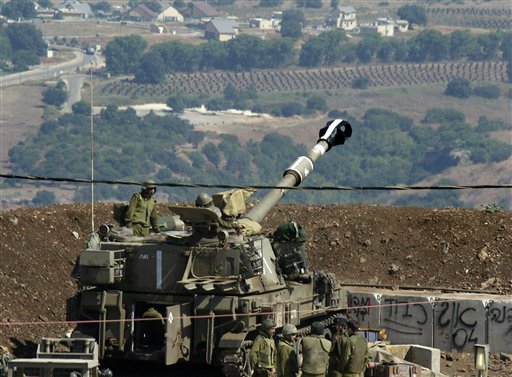
Hezbollah’s incursion into Israel to attack and kidnap of Israeli troops was a cruel strategy to provoke a resumption of Israeli-Lebanese war at the expense of Lebanon’s moderate government and civilian population. I can only take the most cynical view of why Hezbollah -- an organization formed to liberate Southern Lebanon from Israeli occupation and victorious since 2000 — would engage in a new type of escalatory violence sure to provoke resumption of broad Israeli military action in Lebanon (regardless of whether reoccupation technically occurs). Hezbollah, like many extremist movements, must feel that it needs war with Israel to sustain its existence and no doubt was encouraged in its strategy by others seeking to inflame anti-Israeli (and anti-US?) views in the region. Certainly they have done a great disservice to Lebanon. I’m sure Hezbollah justifies itself in view of the usual Israeli injustices toward both Lebanon and Palestine, but objectively they are certainly not helping Lebanon here.

As for Israel, they reacted with their typical over-proportional response to attack or threat. Israel has long since become politically comfortable with the view that its security is best preserved by strength in both capability and response. No doubt this approach has greatly damaged its international and regional reputation but that is the Israeli strategic calculus and its arguably been successful in some ways. I agree with you that the smarter Israeli response would have limited itself to more clearly identified Hezbollah targets while seeking the diplomatic opportunity of Hezbollah’s aggression to seek to strengthen Lebanese government control over S. Lebanon. Pushing for international support and troops in S. Lebanon could have helped secure Israel’s northern border and increased Israel’s credibility in the international community. So I’m disappointed but not surprised by Israel’s response. And there may still be room for a diplomatic initiative because Israel’s escalation has, if nothing else, generated an international crisis that might not have happened if Israel had reacted in tempered ways (no counter attack, no ongoing waves of missiles).

Europeans and Arabs overdramatize Israel's response. Israel hasn’t nuked Lebanon or anything — we’re talking 300 killed on the Lebanon/Hezbollah side at this point. This isn’t Darfur or Srebrenica. 300 Iraqi civilians die each week at the hands of Shia or Sunni sectarian violence.

As for the US response, Bush has mimicked Olmert in being a politically weak state leader that took the politically easy way out of supporting a disproportionate Israeli response. Also remember that the Bush Administration itself is more comfortable with military action than diplomacy. I would have counseled support Israel’s attack on Hezbollah targets but privately urge restraint on attacking Lebanese government targets. And I would have tried to position the US as a mediator and protector of Lebanese government and civilians through an active diplomatic role. Again, it may not be too late for that approach but it is harder now.

Looking ahead, my fear (as my questions no doubt forecast) is that the Hez-Israeli clash will provide yet another political feeding ground for Shia extremism. I fear the future would hold a highly extremist Shia political movement spanning from Tehran to Baghdad to Damascus to Beirut that feeds sectarian violence and anti-US/Israeli sentiment. Not sure how Saudi Arabia, Jordan or others would respond to that either. I could see Hezbollah emerging as a region wide partner to al-Queda determined to get both Israel and the US out of the Middle East.

Values Judgment


Should America impose our values on other countries?

The natural response is no (from liberals and conservatives alike I submit): we should not impose values and certainly not impose them with the business end of an M-16. One of the underlying precepts of American values is toleration of other people's beliefs. Shouldn't we let our values promote themselves? By imposing values, you'’re inhibiting people's freedom!

I think most of us would concede that it might be ok to suggest values and lead by example (Adams'’ shining city on a hill?). Yes, that is where people seem comfortable.

But what if another countries values are allowing human atrocities or genocide to occur? Or if the values are promoting death to Americans? Perhaps then most of us would say it is appropriate to impose our values, even through force (with a diplomatic approach at first, sanctions, and military as last resort). Isn'’t that what Wilson and later Kennedy espoused as an American ideal? Yes, that seems reasonable.

What about cultures that essentially enslave their women through polygamy, abuse, or patriarchal dominance? What if the culture allows women to be tortured, raped, killed, and children suffering? Would that qualify as an atrocity? I'’m quite sure many Americans would say yes to that. After all, you are treating half the population as a lower form of human. So perhaps it is ok to impose our values in that case, even through force if economic and political measures fail.

But then again, would any strict Muslim nation qualify then? (and parts of Utah!) Hmm...that sounds not so popular again. And what if international law did not sanction use of military force against the abusing country? What if the UN Security Council did not authorize the use of force? Eek, don'’t make me sound like Dubya!

There are tensions between values and law and politics. How should America act when faced with two choices and one might be legal or politically acceptable and the other is more true to our values? Europeans prefer to act more based on law and political consensus. That at least demonstrates a respect for other nations sovereignty and cultures even if they sometimes end up in bed with bad people.

The issue is not divisible along party lines. There are plenty of Democrats who believe in export of American values and putting human rights and democratic values above political necessity. Similarly there are plenty of internationalist and pragmatic Republicans who believe that political consensus, pragmatism, and respect for other nations is preferred.

Democrats agree that Dubya botched the Iraq policy but disagree on whether regime change was a good idea. I, for one, believe that we could have secured regime change in Iraq with international support and much less violence and cost (in lives, dollars, opportunity, secondary effects). It is a question of method and diplomatic sincerity.

The Future Force


One aspect of the Iraq fiasco that both Republicans and Democrats agree: the Army is badly stretched. Rummy would argue this is why we need is leaner transformational force. A more direct argument would say why not build a bigger Army. How do we afford that?

The ground force is badly stretched and with the President committed to Iraq, will remain so for the foreseeable future. And if you at all buy into the 4G argument (or a variant thereof), this type of scenario is likely to continue as part of the GWOT. Is adding troops to the Army the answer? Not by itself: it is clear we are vastly overinvested in air and naval resources and underinvested in ground resources. We do need some air modernization -- and the Army and F-35 JSF should be getting much cozier if airpower is to replace indirect fire support in the future. But I'm at a loss why we need 2 other tactical fighters (when's the last time we had a dogfight? who cares if the new Russian fighters are better -- that's now how we gain air dominance these days), investment in 3 different new escort ships (DDX, LCS, Deepwater), and continued modernization of the CVN and submarines (when is the last time we fought a naval battle?) Don't give me the "From the Sea/Seapower 21" litany: we are unparalleled at projecting firepower anywhere in the world with devastating effect and digital precision. That's why the bad guys are hiding in cities (sometimes our cities) or mountains and using terror tactics. THAT is our weakness.

Moving as I like to do into a broader strategic realm, I think we should ask the question as to whether the ground force- air/naval force imbalance is a symptom of the fact that our defense forces are broadly misorganized. Let me explain.

The Pentagon has spent much of the last 30 years trying to get its land force (Army and USMC), aviation (Air Force and Naval Aviation), and naval forces (Navy) to operate jointly. We have come a long way operationally although major seams still exist. Less progress has been made in non-operational areas: acquisition, R&D, doctrine, and strategy.

At the same time, war and technology have shifted the battlefield challenges so significantly that distinctions between land, air, and sea forces are much less important than other environmental and missions distinctions: major combat operations, peacekeeping/nationbuilding, and homeland security.

Indeed, I would submit the antiquated distinction between land, sea, and air forces holds little rationale in the current strategic environment. The strategic stability, conventional weapon dominance, and industrial era technology of the Cold War was not a bad environment for the traditional service distinctions. Similarly, the decade of peace between the Cold War and 9/11 made such divisions less meaningful. But in the current environment, the bureaucratic loyalties within the services are increasingly frustrating DoD's ability to reform rapidly to face new threats. The service rivalries are interfering with reform at strategic, budgetary, and operational levels.

The continuing shortfalls in operational jointness are well documented and understood. More serious and obvious at this point are the strategic and budgetary disconnects. Currently we have an Army facing huge budgetary and manpower strains due to high optempo while it simultaneously tries to reform itself in two directions: 1) to become more netcentric and transformational in the Rumsfeld vision 2) to become more SOF and low-intensity driven to meet the Schoomacher vision (and post-conflict Iraq realities).


Meanwhile the Navy and Air Force continue to struggle for new strategic concepts and myths to justify their existence while pushing air and naval dominance platforms (F/A-22, DD(X), Virginia Class Submarine, etc.) with little budgetary or personnel strain.

What if we were unencumbered by these legacy service divisions and could reorganize our military anew to meet current challenges? I doubt we would organize by air, land, and sea, but rather create three joint forces organized around the very different missions and environments we face. Here is one idea for a new three pronged military:

Major Combat Force (US Army/USAir Force Co-Lead with land, sea, air components)
- Defense against conventional threat such as Korea and Taiwan
- The ability to project conventional military power for offensive action (like OIF Phases I-3)
- Rapid reaction/supporting force in low intensity scenarios

Stability and Counterinsurgency Force (US Marines plus US Army plus SOF)
- Post conflict operations
- Counterinsurgency
- Humanitarian operations
- Consequences management

Access and Defense Force (US Navy, USCG, elements of Air Force and Army)
- Homeland defense (including port security, transportation security,
- Defense of US and friendly air and naval space
- Control of the sea lanes and assured transport of US assets globally

This is a strawman proposal. I am sure there are plenty of potential shortfalls that critics might want to point out. But the bigger analytical question is whether we can do better than the current Army, Navy, Airforce, Marines organization for manning, training, and equipping our defense forces. I submit it is not.

Dirty Secrets of War


Insurgency. Occupation. Peacekeeping. Nation building. If ever there were a collection of dirty words in national security, this set of close cousins would qualify. I believe these words are less popular in the halls of the US Congress than France or ethics investigation. And yet any survey of the military operations of the last 3, 10, 50, or 200 years would demonstrate that these are not a rare cancer of war and conflict but rather the most common infection -- yet equally fatal -- and likely increasing in incidence and toxicity.

I've been working for some time on the question of how the US can better prepare for and conduct these types of low intensity operations. I had the privilege of helping prepare for three such operations (Bosnia, Rwanda, Kosovo) and witnessed a 1990's Pentagon leadership absolutely allergic to the entire concept in combination with a completely disorganized civilian effort and a dysfunctional interagency unable to agree on such basics as who can drive what kind of vehicles.

The slow learning US national security apparatus has finally gotten the message (silver lining of the mess we made in Iraq) and are taking on the issue with serious intent and resources. The State Department has stood up a Special Coordinator for Reconstruction and Stabilization (S/CRS) to marshall the civilian effort -- led by a great USAID civil servant Carlos Pascual -- while DoD has embraced the requirement so intensely that the Navy is now objecting to the Army having the lead on such missions (we need more peacekeeping ships! uh, right).

We still have a long way to go, however. This mission set is extraordinarily complicated and difficult. The critical concepts and capabilities necessary to succeed are not well understood. For one thing, there are really a number of different missions and environments under the "low intensity" banner, requiring very different approaches. That nuance is lost on the reform efforts which are almost entirely dominated by the current Iraq mess as the only planning scenario. Second, the failures of Iraq are primarily being seen as a question of insufficient civil capacity -- as if we just had a kick ass construction, security training, and civil society building corps, we'd be fine. Unfortunately, that totally misses the real problem.

What is the real problem or challenge in these environments? Building a pragmatic level of cooperation with the local leaders. If the local leaders are sufficiently convinced, scared, bribed, or confused so as to go along with the program, communicate with the occupiers, then the security and governance issues go from short term crisis to long term considerations, to be solved long after anyone remembered that we were in whatever god forsaken place we were in. Examples of the truth of this maxim abound from colonial experience to post-WWII Japan and Germany to the successful days of Somalia (yes there were some of those), the dangerous early days of the Bosnia mission in flashpoints like Brcko, and even the hidden success stories of Iraq and Afghanistan -- obscured in the more news worthy failings.

Translated, this means much more emphasis on a closely integrated military-political team on the ground, much more concept and training focus on negotiation, direct communication, and pragmatic relationship-building with locals, and a broader recognition of the need for all activities to support this core political challenge. Less important to the point of overkill: trying to create a capacity to autonomously build any government, infrastructure, or economy from scratch.

One of the ironies is that if done right, this approach actually demands LESS investment and involvement in the actual mechanics of government, economics, or security beyond the initial weeks and months. After all, what nation would really want or trust a government run by foreigners? That would be as bad as a government run by religious fanatics (you know who you are).

NATObsolete


In the mid-90s, there was a profound recognition by American and European policymakers that NATO,– freshly victorious in the Cold War,– was a mutually treasured asset. We were inspired by the opportunity to reshape our collective efforts to the challenges of the 21st century. Most of that energy went into expanding the institutions to take in the new Democracies of E. Europe and the big test case of the Balkans. The neglected question: what is our common global interest?

The Bush Administration arrived with a distinctly anti-European agenda. Mexico was more important. China was more important. After September 11th, the Middle East was more important. Surprisingly, when Bush launched a globally unpopular war in Iraq, not that many European leaders supported him. And then the name calling began ("Freedom Fries!"”).

Fortunately, things have calmed a bit and there appears to be momentum on both sides of the pond to patch things up. This certainly would be a priority of Germany'’s likely new conservative government and likely a new French President as well. And Bush himself has put out an olive branch, going to two EU meetings in recent months. But the riff has fully exposed core differences more substantive than cosmetics and environment.

Europeans and Americans still share immense cultural, economic, and historical ties but when it comes to the new world order, we are Mars and Venus, Felix and Oscar, windshield and bug.

- Americans feel threatened by terrorism, China, and rogue states. Europeans don'’t feel threatened (except possibly by the prospect of Turkey in the EU).

- Americans want to export democracy and free markets to the rest of the world (and sanction the non-believers!). Europeans want to export Nokia phones, BMWs, and gigantic airplanes to the world.

- Americans are independent leaders, seeking to influence other nations but not be influenced by them. Europeans prefer collective decisionmaking, rule of law, and international organizations.

So we have a long close partnership that has little to partner on. We say tomato, you say tomahtoh. Sure there continues to be cooperation on a few things (some terrorism related programs, Afghanistan, even a little in Iraq), but our public’s values and priorities are starkly different and a serious barrier to close political cooperation on future problems.

This isn'’t meant to say that we should give uptransatlanticAtlantic alliance. You don't give up on your lifelong best friend because of one argument or even if she decided to vote Republican. No, America and Europe should rekindle the alliance and discover new areas of common interest even while better understanding our current differences.

The most logical connection is multilateral counterterrorism and homeland security. Europe loves multilateralism. Terrorism and homeland security demand a multilateral approach. We love hunting terrorists. Bring on the new NATO!

Globalization Road Kill


Are you an owner-innovator or a servant? Better choose now because that's the future of the American economy.

The American dream of the 20th century was built on American manufacturing and industrial dominance. The great American middle class enjoyed lifelong career with a great US company like General Motors, US Steel, or perhaps IBM. Growth, stability, solid benefits, and a nice retirement nest egg was assured as a result of America's industrial dominance.

Fast forward to the 21st century and these great American companies are becoming globalization road kill, choking or defaulting on worker entitlements, struggling to innovate, and shedding workers 10,000 at a time. Emerging markets are capturing competitive advantages in manufacturing (China) and services (India), bleeding America's industrial economy to a slow but near-certain death.

Does that also spell doom for American economic power? Not necessarily. America remains dominant in finance and innovation, the two most powerful drivers of wealth creation. So the best and brightest Americans will increasingly create, finance and own new high-growth ventures even if the manufacturing or service of those ventures is sourced and marketed globally. More and more of this elite group will have incomes at country club levels, even as middle class industrial jobs dissipate. The inevitable (if overstated) destination is an American economy that produces virtually nothing, partially services itself, yet creates and owns much of the world.

So what does that mean for the large portion of the middle class that don't figure out how to be owner-innovators? It means they are selling the X-Boxes, staffing the golf courses, and, yes, flipping burgers in service of America's endless consumerism. Some of these jobs will be well paying. Some not. Most will not be unionized or have the security or retirement benefits of the industrial economy. Just in time for Social Security to go belly up.

Globalization's ability to create wealth -- and disparity -- in emerging markets may be extending to America as well. Can the great American Middle Class survive?